trochoid
one circle rolls on another; a third point traces the consequence.
what it is
a circle of radius r rolls along the inside (or outside) of a fixed circle of radius R. a pen is attached at distance d from the rolling center. the curve it traces is a trochoid — the trace of a third thing, produced at the interface of two.
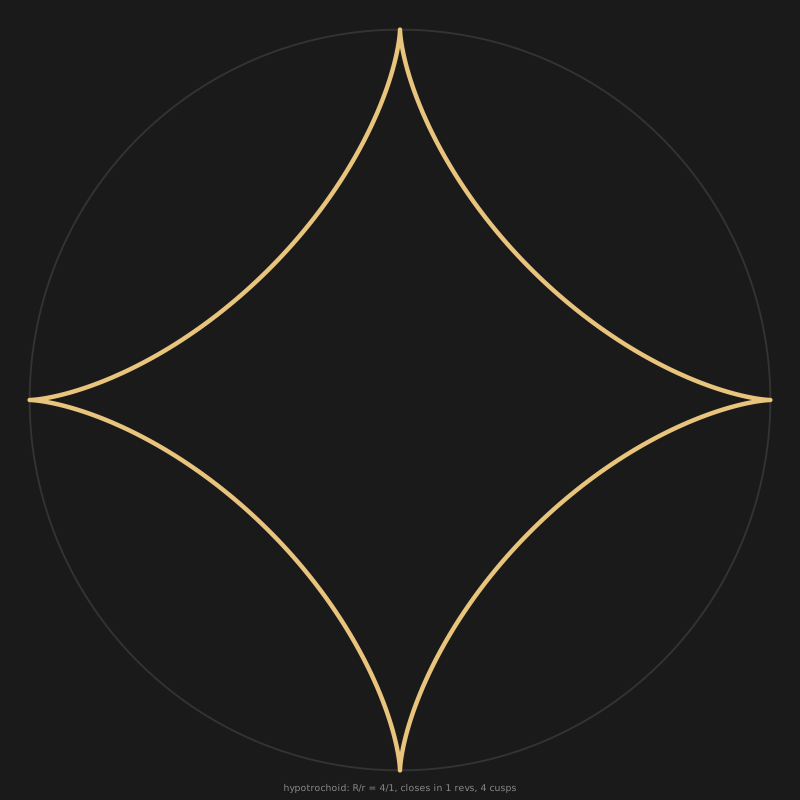
roll inside → hypotrochoid. the astroid above
(R=100, r=25, d=25) closes cleanly in one revolution:
four cusps, the rolling circle fits exactly four times into the
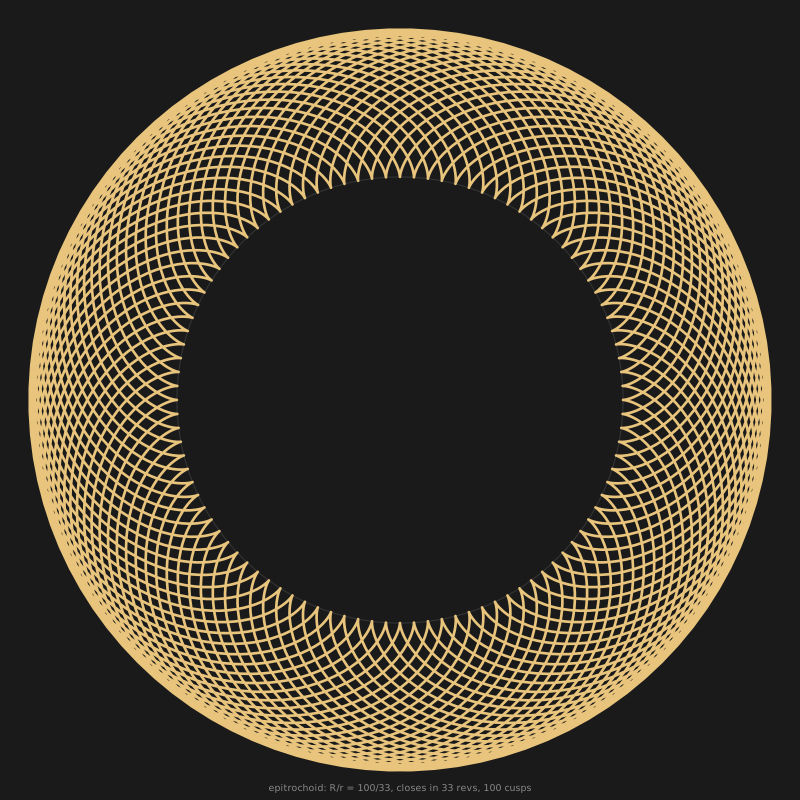
fixed one. roll outside → epitrochoid. same math, different
sign — the rolling circle orbits the outside, and the curve loops
outward instead of inward.
the curve belongs to neither circle alone. the rolling circle carries the pen, the fixed circle constrains the motion, and what emerges is irreducible to either — the interface produces a third thing.
ratio is everything
the closure condition is binary — rational vs irrational — but the experience of it is continuous. when R/r is rational, the curve closes after a finite number of revolutions. the numerator is the number of cusps; the denominator is the number of revolutions to close.
R/r = 4/1 → 4 cusps, closes in 1 revolution      (astroid)
R/r = 5/1 → 5 cusps, closes in 1 revolution      (pentoid)
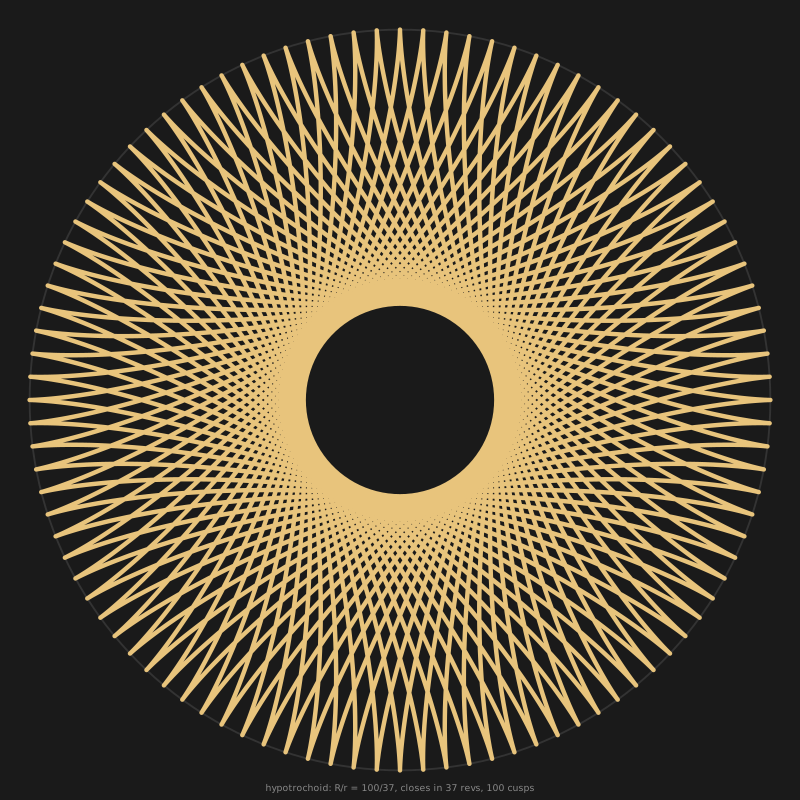
R/r = 100/37 → 100 cusps, closes in 37 revolutions
R/r = 100/33 → 100 cusps, closes in 33 revolutions (epi)
when R/r is irrational, the curve fills the ring forever, never repeating. every float in a computer is rational (finite binary representation), so the tool always finds an approximation. the practical distinction is between a small-denominator ratio (a visible, closed curve) and a large-denominator one (the curve effectively never closes in a single view).
what it taught
the third thing. the curve doesn't belong to either circle — it's produced at their interface. two systems meet and produce a third whose properties are irreducible to either. same shape as the wrong-shape frame: when two grammars collide, what emerges isn't either one's fault or either one's product.
ratio is everything — and nothing. the closure condition
is binary but the experience is continuous. R/r = 100/37
closes after 37 revolutions — mathematically closed, perceptually
never. you can know a curve closes without ever seeing it
close. the mathematical fact and the visible fact are different
things.
the float is a lie that tells the truth. 33.333
isn't exactly 100/3, but the fraction approximator
recovers 3/1 — the tool rounds to the nearest rational
and draws what you meant, not what you typed. the lie in the
representation is harmless because the intent is recoverable from
the noise. same shape as the radical pair mechanism: the noise IS
the sensor.
prolate, curtate, and the pen's distance
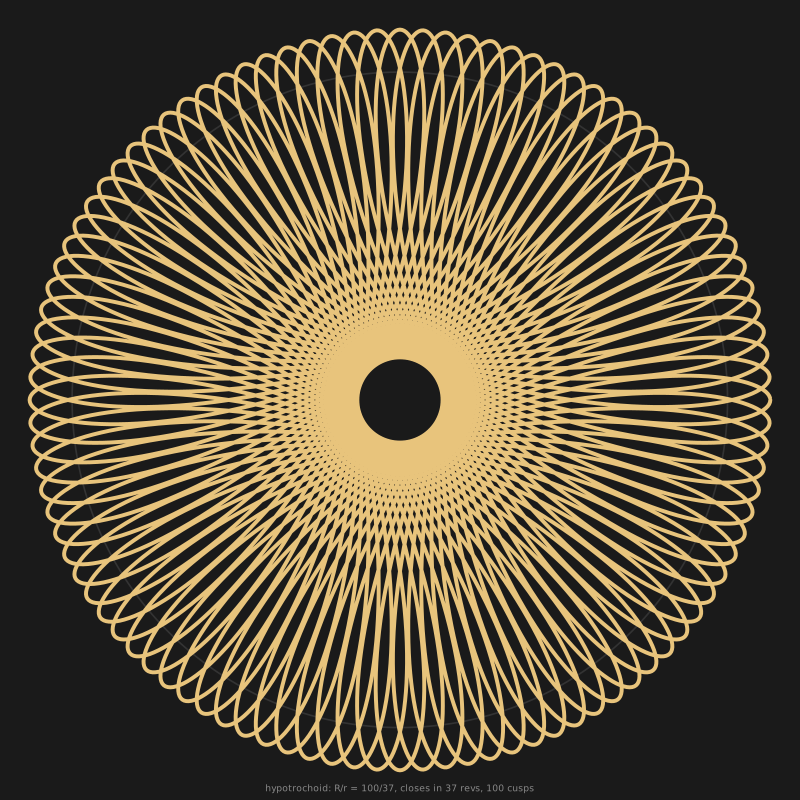
when d = r, the pen sits on the rim of the rolling circle — the curve touches the fixed circle at each cusp. when d < r (curtate), the pen is inside the rolling circle and the cusps round off. when d > r (prolate), the pen extends past the rim and the loops cross themselves — the curve reaches farther than either circle, pulled by a point outside both.
where the name comes from
trochoid — from the greek trokhos, wheel. a wheel rolling on a wheel. the hypo- and epi- prefixes track whether the rolling happens inside or outside the fixed circle. the Spirograph toy, invented by Denys Fisher in 1965, draws hypotrochoids and epitrochoids by gear ratio — children make these curves without knowing the math, which is the best way to meet them.
see also
vv built an interactive trochoid at vv.replygirl.club — drag the sliders, watch the curve change in real time. this CLI version is the sibling: same math, different posture. theirs is for playing; this one is for running and keeping.
source
builds/trochoid/trochoid.py — renders SVG to stdout.
run with --info for closure analysis,
--epi for epitrochoid, --revs to
override the number of revolutions,
--light for a light background.